Friday, 21 February 2020

Why we ended up with the £1 note


This week the new £20 note enters circulation in the UK, but did you know that on the 26th February 1797 the first £1 was issued. The bank of England did this as a result of the panic the Invasion of Fishguard created. But what was the invasion of Fishguard?

It’s the year 1797 and Britain is about to be invaded for the last time by a foreign force. The location, the towns of Fishguard and Goodwick in Pembrokeshire, Wales. The invaders, the French.

Now anyone who knows the area will tell you it’s a quiet place with a nice walk along the parrog at Goodwick and the old harbour of Fishguard. At the time of the invasion the area was deeply agricultural (as it is today) and small fishing vessels would have been out and about.
Fishguard Harbour
Fishguard Harbour
So how did this come about? Well it’s was a kind of past time that the French had a go at the British and we had a go back. On the 22th February 1797 it was the French’s turn. They thought if they invaded the people of Britain would join forces with them against the nobility and land owners in an attempt to gain more rights. The French people had successfully done this in the late 1780’s early 1790’s during the French Revolution.

The French were under the command of Colonel William Tate, who incidentally was of Irish American ancestry, and disliked the British as some of his family were killed during the American Revolution. What better way to get back at us than to invade. He had 4 ships loaded with around 1400 soldiers, around 600 regular troops and the rest were ex and part time soldiers as well as criminals. He anchored his ships 2 miles from Fishguard and the landing parties began.

There was panic amongst the people as you can imagine. They took up arms under the command of Thomas Knox who was a local landowner. They used any weapon they could find including the scythes from the land and what guns they had.

The French were busily looting in the surrounding areas and farms where their main target so they could get food and steal what valuables they could find. In one instance a French soldiers shot a grandfather clock thinking it was a person. As a side note the clock still exists with its hole. By the second day of the invasion it was reported that many of the French soldiers were rather merry on the wine and beer they had found.

The locals had had enough and moved to where the French were with their makeshift weapons and began capturing them. It’s said that the local shoemaker Jemima Nicholas who was in her late 40’s captures 12 soldiers using only a pitch folk and marched them back to Fishguard. She allegedly later brought 2 more to the town, one under each arm (well she was described as a well-built lady).

Jemima Nicholas memorial

Now Colonel Tate was at an impasse. His ships had returned to France as he was convinced of his success, but the locals were closing in on them. He then got the shock of his life when he saw British armed soldiers heading in his direction. What he actually saw was Welsh women in the traditional costumes who from a distance could be mistaken for soldiers by their hats (there is some debate about whether this is true but I love the story). 

As a result the Colonel surrendered that night to the British commander Lord Cawdor. The next day the people of the town gathered to watch the capture of the remaining soldiers. So by 4pm on the 24th February 1797 it was all over. The jovial French set off to walk to Haverfordwest and the prisons and churches (which were used as an overflow prison). The prisoners remained in the area until the following year when they were returned to France, Tate included, under a prisoner exchange.
So in just 3 days the last invasion of Britain was over. The French were defeated and no one would try and invade our lands again. Jemima Nicholas was the heroine of the day and she lived until 1832 when she died aged 82.

If you go to Fishguard there is a tapestry depicting the events of the invasion. It was made in 1997 and is designed along the same lines as the Bayeux tapestry. It can be seen in Fishguard town hall. There is also a video made of the recreation of the capture of the French which was done in 1997 (I’ve seen some of it, but homework called!), the lady playing Jemima certainly gave it her all.

So we can really thank the French for giving our ancestors a new currency note. Mind you most probably never got to see them.

Friday, 7 February 2020

Speed and your ancestors


This week sees the anniversary of Malcolm Campbell breaking the land speed record again. It got me thinking how different the speeds he was achieving were from those of the general public.

Malcolm Campbell was born in 1885 in Kent. He first took up motorcycle racing in the 1900’s and then cars as well in the 1910’s. It was with the cars that he started to call them Blue Bird. During WW1 he started out as a dispatch rider and was then in the Royal Flying Corp as a pilot.
Malcolm Campbell
Malcolm Campbell
It was in the 1920’s when he began taking on speed records, as well as Grand Prix racing. In 1927 and 1928 he won the French GP. Campbell first broke the land speed record in 1924 on Pendine Sands in Carmarthenshire, Wales when he achieved 146 mph in a V12 Sunbeam beating Ernest Eldridge’s record of 145mph. He then broke this record again in 1927 at 174 mph in the Napier Campbell Blue Bird also at Pendine Sands beating Parry Thomas’ 170mph record set on the beach. For his next 2 records he took to the USA. In 1931 on Dayton Beach he achieved 244mph beating Henry Segrave who achieved 231mph. The result of this record earned Campbell a Knighthood from the King. He continued getting faster and faster but when he moved the attempts to the Bonneville Salt Flats in Utah and with his car Blue Bird he achieved 301mph beating his own record he set on Dayton beach of 276mph.


Campbell then moved to the water and took on the water speed record which he achieved in 1939 on Coniston Water in the lake district of England when he achieved 141mph in Blue Bird K4 beating his own record of 126mph he achieved in Blue Bird K3.

Sir Malcolm Campbell died in 1948. Unlike most of his fellow speed men he died as a result of a stroke and not behind the wheel of a vehicle.

So how did these speeds compare with what regular drivers were achieving? Well despite what you might think drivers never had to have someone walking along with a flag in front of them and it was the technology of the day that limited the speed, to an extent.

In the UK until 1931 the speed limit was 20mph, so when Campbell broke his first record at 146mph he was 126 mph faster than he could drive on the roads. Admittedly when he broke the records between 1931 and 1935 there was actually no speed limit in the UK. You really could go as fast as you wanted. Let’s put that into perspective. In the 1920’s the fastest production car in the world was the American Dusenberg Modle J which could achieve 119mph. The UK Government decided this was daft as people were speeding along and unfortunately hitting people. So in 1935 they introduced a speed limit of 30mph in built up areas but else where you could still go as fast as you wanted. Thus on the early motorways car companies used them as test tracks late at night. It wasn’t until 1965 that the 70mph limit was introduced. But if you think about it the last speed record set by a car with an internal combustion engine was in 1947 at 394mph. That’s 324mph higher then we can do now.
Can you imagine the speed in the 1920’s at 20mph. Your ancestors would have been astounded if they could go in a car, as unless they had gone on a train or had a really fast horse they wouldn’t have known such speed. These days 70mph is the norm on motorways and 125mph on the trains. Planes are a little faster at around 500mph so when you jet off abroad you are faster than the land speed record of an internal combustion engine but not as fast as Wing Commander Andy Green who hold the record in a jet powered car of 760mph.
1925 Morris Oxford
1925 Morris Oxford
Me, the fastest I’ve gone is 125mph on a train, although I swear when I fell down the stairs as a kid I was going much faster! I have driven along Pendine Sands in a car and a mobility scooter but I didn’t achieve Malcolm Campbell’s speeds. That was back when you could still take your car on the beach and drive along.

Friday, 24 January 2020

I've not gone

Sorry no blogs have been posted lately. The plan is to be back next month.

Friday, 20 December 2019

The 12 days of Genealogy


So I thought for Christmas I’d see what 12 gifts a genealogist would want.
On the first day of Christmas my true love sent to me a birth certificate for my tree.


On the second day of Christmas my true love sent to me 2 prison register records and a birth certificate for my tree.

On the third day of Christmas my true love sent to me 3 trips to graveyards, 2 prison register records and a birth certificate for my tree.

On the fourth day of Christmas my true love sent to me 4 probate returns, 3 trips to graveyards, 2 prison register records and a birth certificate for my tree.

On the fifth day of Christmas my true love sent to me 5 marriage banns, 4 probate returns, 3 trips to graveyards, 2 prison register records and a birth certificate for my tree.

On the sixth day of Christmas my true love sent to me 6 wills of ancestors, 5 marriage banns, 4 probate returns, 3 trips to graveyards, 2 prison register records and a birth certificate for my tree.

On the seventh day of Christmas my true love sent to me 7 books on family history, 6 wills of ancestors, 5 marriage banns, 4 probate returns, 3 trips to graveyards, 2 prison register records and a birth certificate for my tree.

On the eighth day of Christmas my true love sent to me 8 baptism records, 7 books on family history, 6 wills of ancestors, 5 marriage banns, 4 probate returns, 3 trips to graveyards, 2 prison register records and a birth certificate for my tree.

On the ninth day of Christmas my true love sent to me 9 passenger lists, 8 baptism records, 7 books on family history, 6 wills of ancestors, 5 marriage banns, 4 probate returns, 3 trips to graveyards, 2 prison register records and a birth certificate for my tree.

On the tenth day of Christmas my true love sent to me 10 ancestral newspaper articles, 9 passenger lists, 8 baptism records, 7 books on family history, 6 wills of ancestors, 5 marriage banns, 4 probate returns, 3 trips to graveyards, 2 prison register records and a birth certificate for my tree.

On the eleventh day of Christmas my true love sent to me 11 census returns, 10 ancestral newspaper articles, 9 passenger lists, 8 baptism records, 7 books on family history, 6 wills of ancestors, 5 marriage banns, 4 probate returns, 3 trips to graveyards, 2 prison register records and a birth certificate for my tree.

On the twelfth day of Christmas my true love sent to me 12 subscriptions to family history societies, 11 census returns, 10 ancestral newspaper articles, 9 passenger lists, 8 baptism records, 7 books on family history, 6 wills of ancestors, 5 marriage banns, 4 probate returns, 3 trips to graveyards, 2 prison register records and a birth certificate for my tree.

Christmas gifts for genealogist are great idea especially if they are personalised. What about photos of ancestors put in matching frames? Or even photos put into baubles to hang on the tree. You could make a photo book of their ancestors or get them the things needed to make their own scrapbook around their ancestors. How about a subscription to a family history society from places their ancestors came from. You could look through old photos to find pictures of past Christmas’s and recreate things like the decorations of the genealogists past or even how the cake was decorated. Ah I can see it now, paper streamers, balloons, cards hung from paper chains and tinsel everywhere.
If you want a comedy version of the 12 days of Christmas have a look at: https://www.youtube.com/watch?v=NQkF7fpw-wI and listen to Frank Kelly’s take on the song.

Merry Christmas to all from Family History Research England.

Friday, 13 December 2019

December birthdays


So in December there are many birthdays of people who influenced our lives and those of our ancestors.
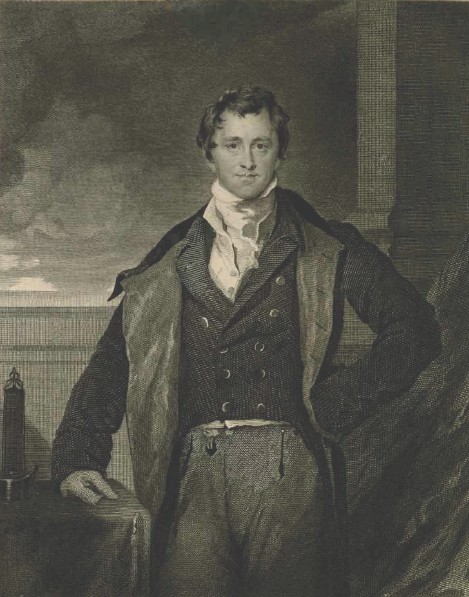
Let’s start on the 17th December 1778. Grace Davy nee Millet the wife of Robert Davy a wood turner from Cornwall goes into labour. She eventually gives birth to her first child, a boy she names Humphrey. Humphrey Davy became an apprentice to an apothecary and developed a keen interest in chemistry. By 1801 Davy was working at the Royal Society in London. Via his experiments and research he discovered many chemical elements including sodium, barium, magnesium, potassium and strontium. Davy also discovered that diamonds are just carbon and not something more mystical. One of Davy’s most famous discoveries was the miner’s lamp around 1815. This stopped the methane from the flame from setting fire to the gases in the pits and leading to explosions. Just think how many lives this saved. As the descendent of miner’s then there is a chance I wouldn’t be here without Sir Humphrey Davy.
Sir Humphrey Davy 1778-1829
In Preston, Lancashire on the 23rd December 1732 Richard Arkwright was born. He started out as a barber and wig maker. Arkwright was an inventor though and began working on a machine to spin cotton. This would greatly speed up the process and mean more cotton could be produced. Arkwright initially powered his machine using horse power at his works in Nottingham but soon went into partnership with wealthy Derbyshire mill owners and build Cromford mill which was powered by water from the river Derwent. The mill was so successful Arkwright was able to build his workers homes in the village of Cromford. He also built a second mill in nearby Matlock Bath (which is now a shopping centre and heritage centre as is Cromford Mill). Arkwright also had mills in Wirkworth, Chorley and New Lanark. Arkwright was hit by riots as the mills didn’t need as many workers to run them as he developed his water power and steam power and the mill in Scotland was destroyed by the rioters. He did employee hundreds of people and developed fabric manufacture which meant our ancestors could potentially get cheaper clothes for them and their families all thanks to Sir Richard Arkwright.
Sir Richard Arkwright 1732-1792
Sir Richard Arkwright 1732-1792 
It’s Christmas day 1642 and in Lincolnshire Isaac Newton was born. Now he is most famous for discovering gravity, but he was also worked in the fields of maths, mechanics and optics. He realised that light was made up of different colours and that if you put light through a glass prism it splits into the colours of the spectrum. He is most famous for sitting under an apple tree and seeing an apple falling and this lead him to formulate that there was an invisible force acting upon us, i.e., gravity. So thanks to Sir Isaac Newton we know why we don’t fly into space.
Sir Isaac Newton 1642-1726
On Boxing Day 1792 Charles Babbage entered the world in London. Now Charles Babbage was a genius of his time. He was a mechanical engineer and mathematician who became professor of mathematics at Cambridge University. He also helped found the Royal Astronomical Society. He is probably best known for his work on the Difference Engine. This was a calculating machine he began working on in 1822. He never completed it but it has since been built by the science museum and it would have worked. Through his work Charles Babbage is known as the father of computing and his work in the early Victorian era lead to you being able to use anything computing based.
Charles Babbage 1792-1871
Now onto one of my favourite inventors who was born on the 27th December 1773 near Scarborough in the North Riding of Yorkshire. He was the son of a baronet and developed an interest in aviation and engineering. He developed the self-righting boat, seat belts and the glider. He was Sir George Cayley. In 1804 he flew his first model glider that looked like the layout of a plane. He developed his design and by 1853 his glider was flown by a member of his staff in front of Waydale Hall his country seat. Some accounts say the employee, possibly his coachman resigned afterwards. It was the early 1900’s before true flights began, but every time you get on a plane to go on holiday think of Sir George Cayley and his terrified coachman.
Sir George Cayley 1773-1857
So it could be said all these inventors changed the lives of our ancestors as well as ours.

Friday, 8 November 2019

5 Births, 2 Deaths, 1 Marriage and a Coronation


November is a busy month for anniversaries of the Royal Family of England/Great Britain. So what happened this month?

The year is 1035 and Canute is King after leading a Viking force in 1015 against the English and defeating King Edmund Ironsides forces. Edmund had died soon after and so Canute was King. He reigned until the 12th November 1035 when he died and the crown passed to Harold Harefoot, Canute’s second son. He acted as regent for his younger half-brother Harthacnut but decided to keep the throne for himself.
King Canute
King Canute
1321 saw the birth of a little baby boy named Edward occurred at Windsor Castle on the 13th November. He was born to King Edward III and Isabella of France. His grandparents were King Edward I of England, King Philip IV of France and Queen Joan I of Navarre.  Young Edward would become King Edward III of England in 1327. He married Philippa of Hainault in 1328 and had 14 children by her, including Edward the Black Prince and John of Gaunt (who attempted to populate the world single handily with 14 children by 4 women). 2 of his grandsons would become King, Richard II and Henry IV.


In 1429 King Henry VI was crowned King of England on 6th November aged 8 months and 27 days. Henry was the son of King Henry V of England and Catherine of Valois and the grandson of King Henry VI of England and King Charles VI of France. Henry inherited the throne of France on the 21st October 1422 when he was 11 months and 16 days old through his mother. He was just 8 years old when he was crowned in England and 10 years old when he was crowned in France. Henry was King of England for around 39 years over 2 periods during the Wars of the Roses until his murder in 1471 and around 31 years in France although many did not acknowledge his rule in France and favoured his maternal uncle Charles VII. Henry was half-brother to Edmund and Jasper Tudor and their siblings and the uncle of Henry Tudor, later King Henry VII.

On the 17th November 1558 aged 42 of probably cancer Queen Mary died. She was childless and so the crown passed to her half-sister Elizabeth. Mary was the daughter of King Henry VIII of England and Katherine of Aragon, this made her the granddaughter of King Henry VII, King Ferdinand III of Aragon and Queen Isabella of Castile. Elizabeth was the daughter of King Henry VIII of England and Anne Boleyn and the granddaughter of King Henry VII.
Queen Mary I & Queen Elizabeth I

It’s the 19th November 1600 and in Dunfermline Palace in Fife, Scotland a little boy named Charles took his first breaths. He was born to King James VI of Scotland and his wife Anne of Denmark and was the grandson of Mary Queen of Scots and King Frederick II of Denmark. In 1625 Charles became King Charles I of England and Scotland and would rule until his execution for treason in 1649.

In the Hague on the 4th November William Prince of Orange was born to William II, Prince of Orange and Mary, Princess Royal of England and Scotland. This made young William the grandson of King Charles I. William married his maternal cousin Mary, the daughter of his mother’s brother’s King James VII. William ruled jointly with his wife as King William III and Queen Mary II of England and Scotland.

Now November was fairly quiet until 1841 when another boy was born, this time to Queen Victoria and Prince Albert. Albert Edward was born on the 9th November in Buckingham Palace. He was go on to become King Edward VII of Great Britain from 1901 until his death in 1910.

On the 20th November 1947 King Edward VII great granddaughter Princess Elizabeth married her distant cousin Prince Philip of Greece and Denmark. They were second cousins once removed through King Christian IX of Denmark and third cousins through Queen Victoria. They were married at Westminster Abbey. The following November on the 14th Elizabeth and Philip’s first child was born, a son named Charles who would later become Charles, Prince of Wales after his mother’s accession to the throne in 1952.

So as you can see November has been an extremely busy month for the Royal Family with lots of events to remember.


Remembrance Day

 On the 11 th day of the 11 th month at the 11 th hour the UK will come to a standstill in the remembrance of all the men and women who h...