Friday, 15 March 2019

How did our ancestors meet?


I was going through my genealogy files the other day and found my grandparents marriage certificates and it got me thinking about how our ancestors met each other.

So I’ll start with the stories of my grandparents. My maternal grandparents met in a way through my Grandpa’s work. Grandpa was a travelling excise officer. He was sent to Peterborough to the sugar and sweet factories. He took lodgings as was the norm. The daughter of his hosts was my Grandma. She was also the manageress of one of the sweet factories he was to visit. My paternal grandparents met as my Grandad was lodging with the mother in law of one of my Grandma’s uncles.
My great, great Grandad and his second wife. © Family History Research England
How did my great, great Grandad and his second wife meet? (I have no idea)
How else could our ancestors have met?


Well probably the most common way was that they grew up together, especially in more rural locations. The further back in time you go the less likely your ancestors were to move around. They probably stayed in one place all their lives unless they had to move for work. This meant they probably married one of the village girls or if they were lucky a new family may move in and they may have married a girl from an exotic place such as 5 miles away.

If your ancestors did travel to a new area for work this would have led to them meeting lots of new potential spouses. If they were the new person in town they would have been highly popular. My great, great grandfather moved to Worksop from Eckington. Here he took lodging at the pub just up the road from the Priory where he was the organist. Guess what he married the innkeepers daughter.

In the towns our ancestors may have met by going to a pub. Just imagine the films set in Victorian London such as Jack the Ripper. There is usually a pub scene. The wooden bars and tables, the piano being played in the corner and the dim lighting. The raucous laughter and singing of boardy songs. What better place than to meet the future spouse. In port towns there was the chance that you could meet a sailor from foreign climes in the pub. Maybe the daughter of a ship’s captain for the boys or the son for the girls. Maybe it led to your ancestor moving abroad or to another area of the country.
If you ancestors were from a more affluent background then maybe they met at a ball held at one of the grand homes or at the musical gatherings held at the theatres. They could have married the heir to one of the local grand houses next to theirs.

It wasn’t just the wealthier ancestors who may have met at the theatre though. There was the music hall performances held in the theatres all over the country. Here your ancestors may have met. It was a lively place and they would have had a great time. The ladies may also have been able to catch the eye of a gentleman who had ventured into the town to see the latest acts.
Did your ancestors met at a dance?
Dances were a prime hunting ground for finding a partner no matter what walk of life you came from. Be it the big balls of the grand houses or the village hall they would have been packed full of your people. They were available to all. Again in the port towns they were have been good places to meet those from far off lands. Over time the dances would develop and during WW2 they were great places to meet members of the armed forces from abroad. How may have a GI bride in their ancestry who went of the USA after the war with their new husband, or have a Caribbean ancestor who settled in the UK.

So no matter where your ancestors came from they will have a story as to how they met their spouse. We may never how some of them met but we need to record the stories we do know so that future generations know the stories and their lives will live on into the future.

Friday, 8 March 2019

The Great Sheffield Flood


On the 11th March 1864 the then town of Sheffield suffered from a devastating flood which brought death and destruction. But what caused it?

Well in basic terms the dam wall at the Dale Dyke dam failed sending the contents of the newly constructed reservoir crashing down the valley straight for the town.
The collapsed Dale Dyke dam wall 1864
The collapsed Dale Dyke dam wall
The Dale Dyke dam wall failed whilst it was being filed for the first time. The night the wall failed Sheffield was hit by a gale which caused the water to put excess pressure on the newly finished dam wall. The dam engineer John Gunson was onsite on the night of the collapse. It’s said that he noticed the crack and opened the values to reduce the pressure on the wall in an attempt to stop a collapse. However the wall failed and approximately 3 million cubic metres of water rushed out of the reservoir and into the Loxley valley. Now if you’re like me that figure means nothing but in terms of pints of beer that’s 5,279,261,959. The water swept through the north of the town from the west to the east. The flood hit the areas of Loxley, Malins Bridge and Hillsborough first following the path of the river Loxley. Loxley at the time actually wasn’t in Sheffield as the town hadn’t grown out that far yet. It was an industrial area down in the valley being home to several trip hammers and rolling mills. One was owned by the Chapman family. When the flood hit the mill and hammer were lost and 5 members of the family died along with around 12 other people in the area.


Hillsborough was next where around 42 people died as the water took everything in its path. The water then carried on down the river valley and the turned where the Loxley joins the river Don. This took the water straight towards the industrial areas of the city. For anyone who knows the city today that where Kelham Island museum and the Wicker Archers are. This took the water through Neepsend and Shalesmoor on towards Attercliffe. This area was highly populated at the time and so the loss of life was great.

In total the disaster claimed the lives of around 240 people of all ages. The youngest recorded death shows a baby Dawson of just 2 days old. Many of the victims were never found as the water took them away. Some bodies were even found the other side of Rotherham in the areas of Kilnhurst and Swinton some 14 miles away. Also the flood destroyed and damaging around 600 homes and washing away the houses contents. There was also the loss of animals and crops and infrastructure such as the bridges over the rivers Loxley and Don.

The people of the town has raised around £42,000 (around £2.5 million in today’s terms) to help those in need. Also an act of parliament meant that the people of the town could make claims against the Sheffield Water Company who had built the reservoir for loss of property and life as well as for injuries.

As always a court case ensued and John Gunson got the blame, although the water company stood by him and kept him in the company until he died. The dam was rebuilt in in the 1870’s and is still there today. If you want to go it’s near Bradfield on Strines Moor just of the A57 not far from the reservoirs in the Derwent Valley.
The path of the flood through Sheffield
Path of the flood showing where my ancestors made claims (sorry about the drawing)
This is where the flood becomes kind of personal to me. My family lived around the Hillsborough area. In November of 1864 my 3 times great Grandparents Charles Beckett and Eliza Parkin married at St Philips church in Shalesmoor. The church obviously survived, but were they affected in any way. Did the loose friends? My research doesn’t indicate they lost any family and there are no familiar names in the lists of the dead which is part of the fantastic research carried out by Karen Lightowler in conjunction with Sheffield City Council and Sheffield Hallam University. You can see the research here: https://www2.shu.ac.uk/sfca/  . It is a fantastic resource. The claims section does show that Charles Becket did make a claim for loses though. He was a quarry man and claimed £13 (around £812 today) for loses of personal possession such as tables and chairs but also the tools he used in the quarry such as his hammers and picks. He was awarded only £9. Also there were claims made by who I believe to be my 4 times great Grandfather George Parkin and by 2 members of the Elshaw family who I must be related to as we are all descended from one man.

So the flood left a trail of devastation in its wake that would change the town and wiped out entire families such as the Chapmans who lost a mother, father and 3 sons. But out of the devastation it gave us genealogists and fantastic insight into our ancestor’s lives as we can read the claims for loses and get a feel for how they lived and how the flood impacted on our lives.

Friday, 1 March 2019

What were our ancestors reading?


Next week is world book week to promote reading especially in kids. These days we pick up our e reader and download the latest books or go to the book shop and get our hands on a proper book. We have books everywhere from the libraries to the shelves at home. We read everything from a good murder mystery to a political thriller to a good paranormal book. But what were our ancestors reading?
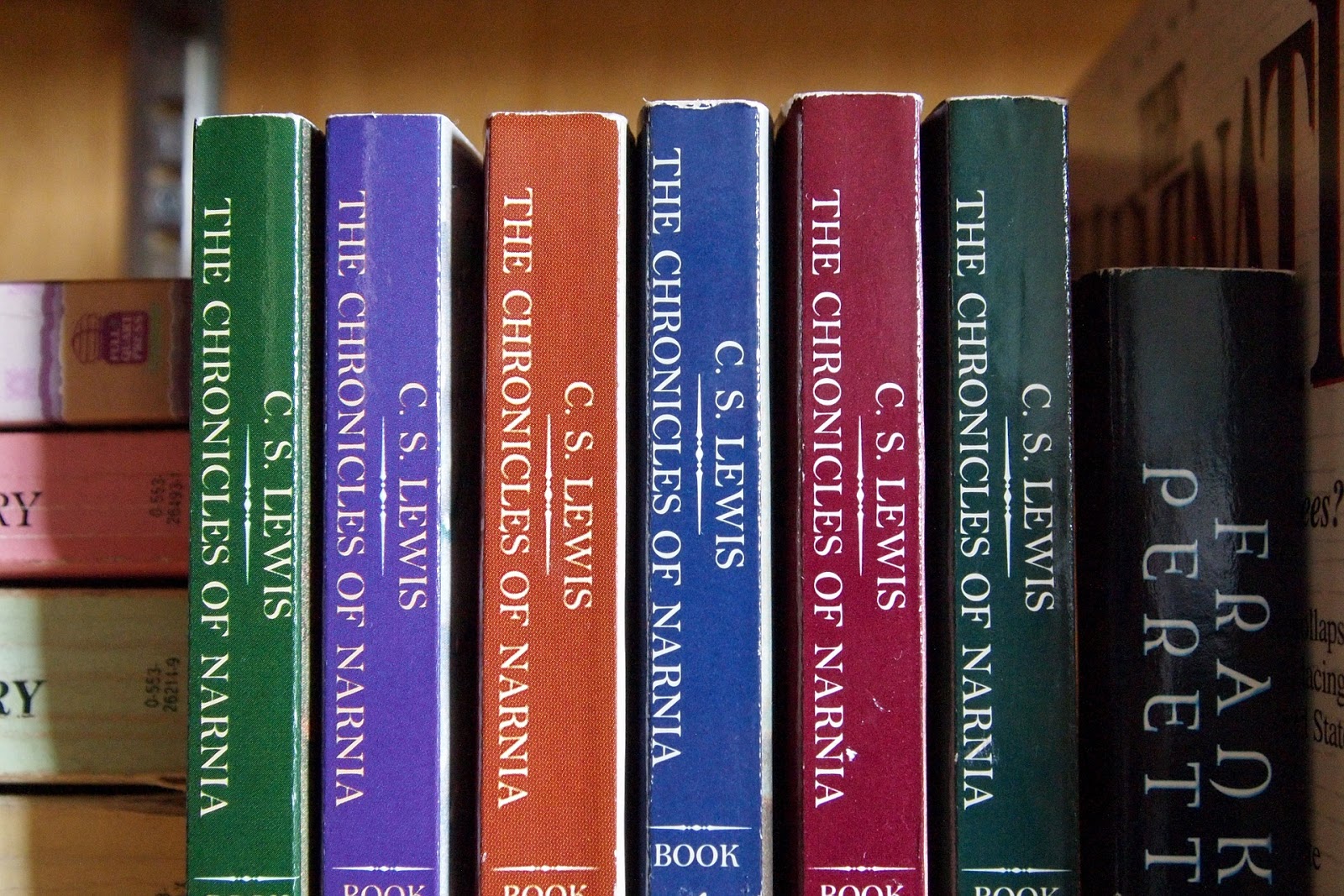
The Chronicles of Narnia

In 1950 one of the best selling books was Animal Farm by Orson Wells (I prefer Orson’s farm the cartoon series). The book is basically a look at what was happening in 1940’s Europe told through the eyes of animals portraying the main political figures. For the younger reader the frankly excellent The Lion, The Witch and The Wardrobe by CS Lewis was published. This is the story of 4 evacuated children who enter another world through a wardrobe and the side of good under the command of Aslan the Lion take on the evil side of the Witch.

If we go further back to 1900 the grownups could pick up a copy of The Interpretation of Dreams by Sigmund Freud and for the kids it was The Wonderful Wizard of Oz by L Frank Baum. I’ll admit I’ve never read either but they were all the rage at the time. Maybe my Great Grandparents or Great, Great Grandparents picked up a copy.

In 1890 you could read the latest Sherlock Holmes, The Sign of Four by Arthur Conan Doyle (he wasn’t knighted until 1902) or for the kids there was English Fairy Tales by Joseph Jacobs. This was a collection of fairy tales including some well-known ones such as Jack and the Beanstalk and less known ones such as The Fish and the Ring. If you’re interested you can read the book here: https://archive.org/details/englishfairytale00jaco

Let’s go back to 1880 where our ancestors may have settled down to read the latest Mark Twain A Tramp Abroad or for the little ones Carlo Collodi’s The Adventures of Pinocchio.

Now in 1870 one of the most famous nursery rhymes was written in the Owl and the Pussycat. For the older reader they could read the latest by the French writer Jules Verne. They could descend under the waves on board the Nautilus and attempt to find the sea monster through Twenty Thousand Leagues under the Sea.
The Owl and the Pussycat


The 1860’s saw Wilkie Collins publish the novel the Woman in White which was a good old who done it. If this wasn’t our ancestor’s bag then maybe they would have reached for the new novel by George Eliot The Mill on the Floss which follows the lives of 2 siblings as they grow up.

1850 would have seen people reading for David Copperfield (the book not a person) by Charles Dickens and in 1840 Edgar Allan Poe published his Tales of the Grotesque and Arabesque which was a collection of short stories.

1830 saw the publishing of the novel The Fortunes of Perkin Warbeck by Mary Shelley which considered that Perkin Warbeck was actually Richard of York the second son of King Edward IV. For the children why not the Chronicles of a School Room by Anna Maria Hall.

Back in 1820 the novel of the year was Ivanhoe by Sir Walter Scott which is set in medieval Scotland in the 12th century. 1810 could have seen your ancestor’s reading the latest by Percy Bysshe Shelley entitled Zastrozzi which is a romance set in Germany.

Now some of these books are still loved today by some even if they just know the books by film and TV adaptations but they do still live on and can be read by us today.

I suppose what we should remember in all this is that we have access to books and we can all read them when we want. This wasn’t a luxury our ancestors may have had. They may not have been able to read and books would have been too expensive for them to buy. The central library in Sheffield didn’t open until 1934 so before then you would have to buy your books. So this world book day why not settle down with a book you’ve being bursting to read and lose yourself in the pages. Now will it be Freddy the Frog, Don’t Forget the Bacon or Eric Carle’s seminal work The Very Hungry Caterpillar!

Friday, 22 February 2019

The last invasion of Britain


It’s the year 1797 and Britain is about to be invaded for the last time by a foreign force. The location, the towns of Fishguard and Goodwick in Pembrokeshire, Wales. The invaders, the French.

Now anyone who knows the area will tell you it’s a quiet place with a nice walk along the parrog at Goodwick and the old harbour of Fishguard. At the time of the invasion the area was deeply agricultural (as it is today) and small fishing vessels would have been out and about.
Fishguard lower town harbour
The harbour at Fishguard
So how did this come about? Well it’s was a kind of past time that the French had a go at the British and we had a go back. On the 22th February 1797 it was the French’s turn. They thought if they invaded the people of Britain would join forces with them against the nobility and land owners in an attempt to gain more rights. The French people had successfully done this in the late 1780’s early 1790’s during the French Revolution.


The French were under the command of Colonel William Tate, who incidentally was of Irish American ancestry, and disliked the British as some of his family were killed during the American Revolution. What better way to get back at us than to invade. He had 4 ships loaded with around 1400 soldiers, around 600 regular troops and the rest were ex and part time soldiers as well as criminals. He anchored his ships 2 miles from Fishguard and the landing parties began.
Landing parties coming ashore in Pembrokeshire 1797
The landing parties coming ashore
There was panic amongst the people as you can imagine. They took up arms under the command of Thomas Knox who was a local landowner. They used any weapon they could find including the scythes from the land and what guns they had.

The French were busily looting in the surrounding areas and farms where their main target so they could get food and steal what valuables they could find. In one instance a French soldiers shot a grandfather clock thinking it was a person. As a side note the clock still exists with its hole. By the second day of the invasion it was reported that many of the French soldiers were rather merry on the wine and beer they had found.

The locals had had enough and moved to where the French were with their makeshift weapons and began capturing them. It’s said that the local shoemaker Jemima Nicholas who was in her late 40’s captures 12 soldiers using only a pitch folk and marched them back to Fishguard. She allegedly later brought 2 more to the town, one under each arm (well she was described as a well-built lady).
Now Colonel Tate was at an impasse. His ships had returned to France as he was convinced of his success, but the locals were closing in on them. He then got the shock of his life when he saw British armed soldiers heading in his direction. What he actually saw was Welsh women in the traditional costumes who from a distance could be mistaken for soldiers by their hats (there is some debate about whether this is true but I love the story). 
Grenadier guards or Welsh women in traditional dress
A British Grenadier Guard and traditional Welsh dress
As a result the Colonel surrendered that night to the British commander Lord Cawdor. The next day the people of the town gathered to watch the capture of the remaining soldiers. So by 4pm on the 24th February 1797 it was all over. The jovial French set off to walk to Haverfordwest and the prisons and churches (which were used as an overflow prison). The prisoners remained in the area until the following year when they were returned to France, Tate included, under a prisoner exchange.

So in just 3 days the last invasion of Britain was over. The French were defeated and no one would try and invade our lands again. Jemima Nicholas was the heroine of the day and she lived until 1832 when she died aged 82.

If you go to Fishguard there is a tapestry depicting the events of the invasion. It was made in 1997 and is designed along the same lines as the Bayeux tapestry. It can be seen in Fishguard town hall. There is also a video made of the recreation of the capture of the French which was done in 1997 (I’ve seen some of it, but homework called!), the lady playing Jemima certainly gave it her all.


Friday, 15 February 2019

Happy 219th Birthday Henry Fox Talbot


I know it’s an unusual birthday to celebrate but in the field of genealogy/photography Henry Fox Talbot is an important man. He was born on the 11th of February 1800 in Dorset, England. He could be regarded as one of the fathers of modern photography as the practices he developed allowed for the modern processes we use today to be developed.
Henry Fox Talbot
Henry Fox Talbot
Now Henry did not invent photography but he did develop new methods for making more stable pictures. He discovered ways to treat the glass plate in the camera so that with the long exposure times required the image would not be lost if too much sunlight entered the camera lens. Thus hours of work were not lost. Also he developed a process which allowed a photograph to be taken in bright sunlight in just a few minutes. His greatest development was discovering a process which would allow a negative image to be printed multiple times on to paper and thus allow for mass availability of an image. So if you can make mass images from one negative you can sell pictures of important events such as the monarch seated on their throne. Also if the event was outside images could be taken quickly so an image of a disaster could be taken for future reference. For example from 1864 there are photos of the devastation caused by the Great Sheffield Flood. This could have been examined to find out why the dam wall failed and thus may have prevented another dam from collapsing.

It should be pointed out that other scientists were also making the same developments and other innovations at same time and thus who invented the processes first is debatable but Henry Fox Talbot’s work in the field cannot be ignored.
The damaged dam wall which caused the great flood of Sheffield in 1864
Aftermath photograph of the Great Sheffield Flood of 1864
So I’ve discussed in the past how important photography is to genealogy as through old photos of our ancestors we truly get an image of the past. But one way that photography helped out ancestors and thus modern genealogists was through post mortem photographs. Now this does not mean the images taken at crime scenes or of murder victims. It was the taking of photographs of loved ones after they had died so you had a permanent memento of them.

Warning! Post mortem image
A post mortem family photograph
This is an image of a girl with her parents taken after she had died. Now some may not like the idea of such a photo being taken, but this could be the only way for the parents to remember their daughter. If you didn’t know you would think it was just a family photo, but in this image if you look closely you can see something is not quite right. The girls image is totally crisp and sharp where as her parents have a slight blur to them as if they didn’t remain perfectly still for the exposure of the image.

Post mortem images were very often tastefully done, especially with young children. In these images the child is usually placed in such a way as they just looked like they were having a nap either in bed or in their parent’s arms. Although there are exceptions to this. There is a picture form the 1940’s of a Syrian bishop seated on his throne at his own funeral.

So to all the men and women who had a hand in developing the camera, negative, lens and final photograph thank you. You may not have realised it at the time but you opened the world of genealogy up by letting us see the faces of our ancestors no matter what stage of their life they were in.

Friday, 8 February 2019

Our Scottish Clans


Many of you will have Scottish ancestry and as such you may be part of a clan. But what really are the clans and how do they work.

Well from the start let me state that I have ancestry in the Buchanan Clan. I am descended from ancestors called Dow and as such am part of the Buchanan clan. My Scottish ancestors came from Govan in Scotland but the furthest back I’ve got is to the late 1700’s in a small village called Lorn which used to be on the banks of Loch Lorne. My 5 times great grandparents were Duncan Dow and Mary McIntyre. According to their son Archibald Dow’s death certificate from 1855 Duncan was a shepherd.
Buchanan tartan
Buchanan Tartan 
So what is a clan? In basic terms a clan is a group who come together as a sort of family. Many started out as villages or regions under the control of a laird or chieftain. They usually share a common bond and have sub groups who come under their flag. They usually share a tartan to denote they are of the clan so they can be easily identified. The use of tartan is also a way of showing who your fealty to a clan chieftain.


Clans are usually headed by the most powerful family of the clan, although they may not carry the clan name surname, so just because you are chieftain of the Buchanan Clan doesn’t mean you have to be a Buchanan. The 6th chief was McBeath McCausland. Since the 8th Chief they have carried the surname Buchanan. The current chief is John Michael Baillie-Hamilton Buchanan.

The clans in some respect were like states or counties. They set their own local laws and the members would pay taxes to the chief. The Chief would hear grievances from the clan’s people and act as a sort of judge and jury. The Chief would also have soldiers who would defend the clan’s lands from attack from other clans which happened when other clans decided to use this method to expand their territory. Chief’s also used marriage to expand their lands. They would marry their children to into other clans in the hope of the marriage bringing another clan under their control.

The role of the clans changed after the Jacobite rebellion of 1745. This was when Charles Edward Stuart the Young Pretender or Bonnie Prince Charlie tried to get the throne back for his father James Edward Stuart the Old Pretender. James Stuart was the eldest son of the deposed King James II/VII (depending on if you’re using the English or Scottish regnal number although now I think we’re supposed to use the VII) of Great Britain and his second wife the catholic Mary of Modena. James was deposed due to his Catholic faith as Great Britain was a Protestant country. He was replaces as King in 1688 to be replaces by his daughter Mary II and her husband William III.
Bonnie Prince Charlie
Charles Edward Stuart 
During the rebellion Bonnie Prince Charlie led his troops in battle against the British army to try to force William and Mary to give the throne back to his father. The rebellion failed but the clans came under great scrutiny for their role in the rebellion. May of the clan chiefs powers were revoked including that of passing laws. Also the wearing of tartan was banned but this was repealed later in the century.

Today the wearing tartan by those descended from the Scottish clans began in the Victorian era. It became fashionable to be descended for the clans and people wanted to show they had a Scottish heritage and all things Scottish. Whether the fact Queen Victoria and Prince Albert had just bought Balmoral had an impact on this I don’t know, but you would think it had. This even continues today. Any Scottish city you visit you’ll find a shop where you can trace you Scottish ancestry and purchase tartan, scrolls, and clan badges showing your lineage. I know I went in one as a kid and have a badge that states my clan in Buchanan.

So the Scottish clans today may not be the powerful groups they were in the past but they do still exist and you can trace you ancestry to them. They are famous throughout the world and new tartans have been developed to show the diversity of Scotland. The Sikh’s of Scotland have their own tartan. Which is the most famous of the clans, well it’s probably the McDonald’s, but not for they clan heritage, more for the burgers.

Friday, 1 February 2019

Jobs that no longer exist


In the course of genealogy you may come across jobs that you don’t know what they are. It may be that they were not uncommon, it’s just that they no longer exist for what ever reason.

So what were some of these jobs?

Well one I’m glad doesn’t exist anymore is a knocker up. I have nothing against the people who had this occupation, it was just what they did. A knocker up was someone who you paid to wake you up in the mornings. They were a human alarm clock. In the industrial towns it was important that you got to work on time. If you didn’t you may be expected to work the entire day for no pay. This meant it was vital to get to work on time. So you paid a knocker up, probably only a penny or two a week, to wake you up. They used various methods from knocking on the house door to using a long bamboo stick to tap on your bedroom window. One lady in London even used a pea shooter to aim at the windows to wake people up.
Artist’s impression of a knocker up
Another job that’s gone is that of a lamp lighter. We all take for granted that when dusk comes the street lights come on automatically and then go off in the morning. In the Victorian era this wasn’t the case. People’s job was to go round lighting the gas lamps in the streets and then putting them out in the mornings. They were imaginatively named. Now they’d probably be known as illumination specialists or something. But they did a really vital job. Can you image walking the streets of Whitechapel in the 1880’s without the gas lamps, it was dangerous enough without it being dark as well.


Another job which technology got rid of was the type setter. Before the advent of typewriters if you wanted to print something you had to load the individual letters into a holder to produce the page you wanted. This was a highly skilled job as you had to put everything in the holder backwards and led to the phrase getting hold of the wrong end of the stick, as if you started from the wrong end then the text came out back to front. Also the person doing the job had to be literate. Imagine if someone wanted a book printed, you would have to place each letter by had until you had a page and then print the page and then do the next page and so on.
A type setter at work
Going further back in time some of the jobs were just horrible and thankfully they have gone in this country.

How would you fancy being a leech collector? Doctors were using leeches to bleed their patients as they felt this would keep them healthy. So they needed leeches to use. People would go to the marshy areas where the leeches lived and catch them. They didn’t use a net. It they were canny they used an old animal. They would stand them in the marsh and take the leeches of the animal’s legs. It they couldn’t afford an animal they used themselves! They stood there and let the leeches attach to them and then pulled them off when they’d had their fill after about 20 minutes. They probably continued to bleed for several hours after so it wasn’t a particularly healthy occupation.

The final job we should all be thankful has gone was that of a gong farmer. They had the nastiest jobs ever. They dug out, buy hand, the cesspits and the toilets. They would remove the waste and take it away. That is a job no one should have had to do. But it did have some advantages. If anything went down the loo that shouldn’t have they could keep it. Also they were paid quiet well as well you would have to be to do the job.
Advertisement for a Gong Farmer
So our ancestry is full of different jobs to those were do now, but really would you want to do some of them. Getting up early in the morning to wake people up or spending all night digging in poop. Sounds like having kids to me! But for society to function they were needed.


Remembrance Day

 On the 11 th day of the 11 th month at the 11 th hour the UK will come to a standstill in the remembrance of all the men and women who h...